TL;DR · Executive summary
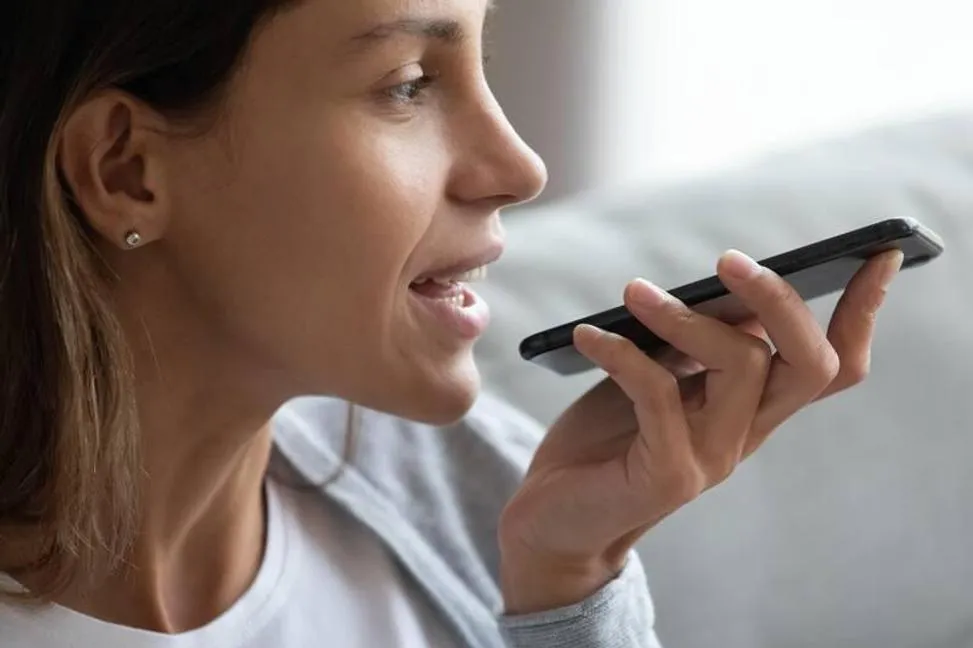
- After 10 years of written journaling, I switched to an audio journal – recording my thoughts instead of writing them down.
- While speaking, I get closer to what is actually happening inside me; insights emerge during the act of talking, not just from capturing pre-formed thoughts.
- Because nobody is listening, I feel safe – I stopped polishing every sentence and learned to speak without preparation, even outside the journal.
- Simply getting things out loud brings relief and clarity – the fog in my head becomes something I can actually hear.
- AI pulls themes, connections, and blind spots from my transcripts that I hadn't noticed myself.
- That's how Reflector was born – my AI audio journal (works in Slovak too), which I'm now making available publicly.
I kept a journal for about ten years.
Not every day. Mostly when things started piling up inside me. When I needed to process something, organize my thoughts, slow down, or look back on a certain phase of my life.
For a long time, it genuinely helped me.
Journaling gave me a place to name what was happening. To connect dots. To revisit moments that stayed with me. And often, only in hindsight, to understand what had actually mattered during a certain period.
But over time, I started noticing something else.
More and more often, writing began to feel forced. Time-consuming. And despite writing a lot, I still felt like many things never truly made it onto the page.
I realized that journaling rarely brought me fundamentally new insights anymore. It helped me pause, structure thoughts, and capture what was already somewhere inside me.
The biggest value often came later – when I searched through old entries and revisited what I had been struggling with a year, two years, or five years earlier.
But the actual process of writing no longer moved me the way it once had.
And then one day, I had so many thoughts in my head that writing them all down would have taken hours.
So I Started Recording Instead of Writing
It wasn’t some big life decision.
I didn’t have a new system figured out. I simply had too many thoughts in my head and wanted to preserve them – but I was too lazy to write everything down.
At first, it felt strange.
Talking to myself with nobody listening on the other side felt unnatural. I didn’t know how to begin. Whether I should speak in complete thoughts. Whether it needed structure. Whether I should restart every time I stumbled over words.
But after a while, something interesting happened.
The thoughts started flowing naturally.
At first carefully. Then more freely. And eventually I realized I could talk much longer than I ever expected.
Sometimes five minutes.
Sometimes twenty.
Sometimes an entire hour.
Not just about what had happened. Also about how things affected me. What they made me feel. What I realized. What I was angry about. What I was afraid of.
I could be radically honest with myself.
When I was writing, I mostly documented events and thoughts. But while speaking, I started getting closer to what was actually happening inside me.
I Used to Be Afraid of Voice Messages
The ironic part is that speaking had never come easily to me before.
Whenever someone sent me a voice message and I had to reply with one, I often felt anxious.
I felt like I had to sound articulate. Smooth. Like I couldn’t pause or stumble. Like it had to sound normal.
I would record voice messages multiple times. And then end up not sending them and replying with text instead.
With the audio journal, it was completely different.
Nobody was listening. Nobody was judging me. I wasn’t sending anything to anyone. I didn’t have to sound smart. I didn’t have to be concise. I didn’t have to make a point. I didn’t have to sound polished, fluent, or prepared.
I could start in the middle of a thought.
I could correct myself.
I could contradict myself.
I could say something that wasn’t fully thought through yet.
And it was precisely because nobody was listening that I started feeling safe while speaking.
Over time, I noticed something loosening inside me. I stopped controlling every sentence so much. I stopped rehearsing what I was going to say. I stopped worrying whether it sounded good.
I just spoke.
And that changed much more than I expected.
What Started to Change
The biggest difference compared to writing was that while speaking, I often discovered things in real time.
When writing in my journal, I usually had the feeling I was capturing thoughts that were already somewhat formed inside me.
With the audio journal, I’d start talking about one thing – and a few minutes later realize the real topic was something completely different.
I would begin with a sentence about something that made me angry.
And while talking, I’d realize that underneath was fear.
Or exhaustion.
Or the feeling of not being seen.
Or something that reminded me of an older pattern repeating itself in my life.
This happened far less often when I was writing.
Writing is an excellent tool. It just had a different character for me. It was slower, more controlled, more edited.
Speaking was more alive.
Less polished, but often more honest.
Sometimes We Don’t Need Advice. We Need to Get Things Out.
Another thing that surprised me was the relief that came simply from talking things through.
Of course, having people you can talk to is wonderful – friends, family, a partner, people close to you.
But how many of them do we speak to completely without a filter?
Not because we don’t trust them.
We don’t want to burden them. We don’t want to look bad. We don’t want unsolicited advice. We don’t want to explain the entire context. Or we don’t yet know what we actually want to say.
And the people closest to us are rarely neutral.
They worry about us. They have their own experiences. They have their own view of us. They often want to help too quickly. Or they immediately tell us what they would do.
Sometimes that helps.
But sometimes a person doesn’t need advice.
They need to get things out first.
Without sugarcoating. Without interruption. Without having to sound reasonable. Without someone immediately reacting.
And that is exactly what the audio journal started giving me.
A space where I could say everything exactly as it was. Even when it was chaotic. Even when it was unfinished.
Just turning a thought from something in my head into spoken words often changes something.
Inside your head, it’s fog. Once you say it out loud, you suddenly hear it. And sometimes that’s the moment you understand what you actually think.
I Learned to Speak Without Preparation
Over time, I noticed another side effect I never expected.
I started feeling more natural while speaking outside the journal too.
I stopped trying to construct every sentence in advance and find the perfect phrasing. I became less afraid of getting stuck or not saying it perfectly.
The audio journal was essentially speaking practice – without an audience.
Without pressure.
Without judgment.
Without the need to perform.
And because of that, I slowly started trusting my own voice more.
This has been one of the biggest personal shifts for me. It’s not just about the journal. It also changed my relationship with my own voice.
Before, I often felt like I had to fully think through everything before saying it.
Now I trust more that I can start speaking and the thoughts will organize themselves along the way.
After a Year, I Never Went Back to Writing
It’s been over a year since I started keeping an audio journal.
I haven’t returned to written journaling.
Not because writing lost its value. I still believe written journals can be a very powerful tool.
But for me personally, recording started feeling more natural.
Faster. More alive. Less controlled. Better at capturing what was happening inside me in real time.
And above all, I have the subjective feeling that during this past year of audio journaling, I’ve grown more in certain areas than during the previous ten years of writing.
Not because recording is some kind of miracle.
But because speaking helped me reach places I rarely accessed through writing alone.
Then AI Entered the Picture
After a while, I started experimenting with what happens when you add AI to the audio journal.
At first it was mainly about transcription.
When a recording is just audio, it has great value, but it’s harder to revisit. Harder to search. You can’t remember which recording contained what.
But once a recording is transcribed into text, suddenly you can work with it in a completely different way.
You can read it.
You can search through it.
You can come back to it.
And most importantly – AI can process it.
Discover something that I missed.
I was surprised how well AI could pull out the main themes from my own words, name connections, and sometimes point to things I hadn’t noticed while speaking.
Some outputs felt strikingly accurate.
Not in the sense that AI solved my problems.
It rather helped me look at my own words from a distance. To see blind spots.
And that’s a big difference.
When a person is talking, they’re often immersed in the emotion. In the situation. In the detail. AI can extract structure from the same recording:
What is actually repeating here?
What is the main theme?
What might be underneath?
What question would be worth asking?
And for me, that made the audio journal an even more powerful tool.
That’s How Reflector Was Born
As I explored this more, I started looking for an app that would make sense for this.
I wanted something simple.
An audio journal that reliably works in Slovak too. Where I could record my thoughts, get a quality transcript, revisit older entries, and also get AI-powered reflection that would help me make better sense of it all.
But nothing quite fit.
Either it wasn’t well adapted for Slovak, or it felt more like a technical transcription tool than a personal journal. Or it was missing exactly the layer of reflection that had made the whole thing so useful for me. Or it wasn’t private.
So I started building my own app.
I called it Reflector.
Reflector is an AI audio journal. I record my thoughts, the app transcribes them, and helps me organize them through quality AI feedback.
From the beginning, I built it to be a safe space where a person can speak freely, revisit their thoughts, and better understand what’s happening inside them.
I Don’t Know If This Would Work for Everyone
I don’t know if audio journaling is for everyone.
Maybe some people connect more with writing. Maybe others need a real conversation with a real person.
But for me personally, recording my thoughts over the past year changed how I think, how I speak, and how I revisit my own thoughts.
I learned to speak more without preparation.
To control myself less.
To be more authentic.
To better understand what’s happening inside me.
I originally built Reflector mainly for myself. But I’m starting to offer it publicly too.
If this idea resonated with you and you’d like to try it, I’d be glad.
Because maybe sometimes a person doesn’t need an answer. Maybe they just need a space where they can finally say everything out loud.
Because maybe it’s only when nobody is listening that we finally start hearing ourselves.