TL;DR · Executive summary
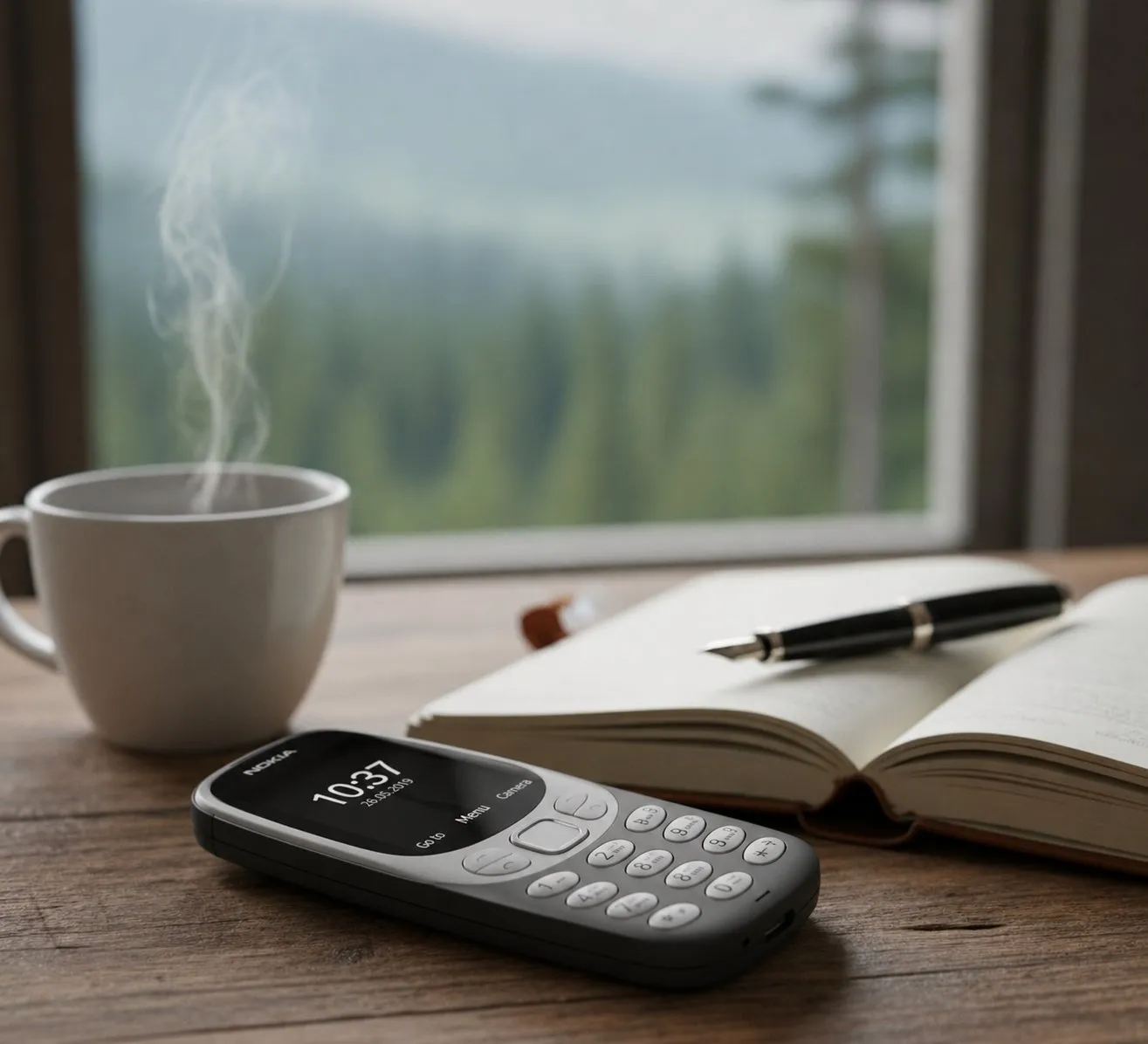
- For 100 days I swapped my iPhone for a Nokia 3310 – no data, no apps, no social media, just calls and texts.
- The hardest part was learning to do nothing; after a week, waiting stopped feeling uncomfortable.
- Suddenly I had time and peace – I read four books, returned to meditation, went on walks without a phone, and started writing.
- Most things can wait. I don't need to be available all the time or google everything immediately.
- After 100 days I went back to a smartphone, but a stripped-down one – no social media, no email or browser on the home screen, notifications turned off.
- The goal was not to find out whether I could live without a smartphone, but what I actually need it for.
I noticed I use my phone in two ways. Often as a tool – navigation, calendar, notes, camera… And then the other way: messages, social media, pointless email checking, videos, googling every little thing, and so on.
The second category was clearly winning.
More than once I grabbed my phone after coming home from work “just for a moment” and a few hours later realised it was dark outside and I had done nothing I had planned. I pulled out my phone while waiting for the bus, for the lift, in a queue. I needed to fill every free minute with something.
And it started to bother me that I no longer knew how to simply be.
So I decided to run an experiment: I swapped my iPhone for a Nokia 3310.
No mobile data. No emails. No social media. No apps.
Just phone calls and texts.
Putting Down My Smartphone, or Heading Into the Jungle?
Before starting, I had a strange feeling that modern life without a smartphone would be nearly impossible.
What about my calendar? Notes? Navigation? Reminders? Camera?
The longer I thought about it, the more absurd my fears seemed. After all, I wasn’t heading into the Amazon rainforest. I was simply putting an ordinary phone in my pocket instead of a smartphone.
For the first few days I carried both, just in case. I was waiting for a situation where I would discover I simply couldn’t function without my iPhone.
It never came.
So I left it at home.
The Hardest Part Was Doing Nothing
The biggest difference hit me while waiting.
Suddenly I had nothing to pull out of my pocket. No messages, emails, or Facebook. Just the people around me and my own thoughts.
At first it was uncomfortable.
I realised how much I had grown used to feeding my mind a new stimulus every moment. As if every minute without content were a minute wasted.
After about a week, that started to change.
While waiting, I simply waited. I noticed my surroundings. I thought. Sometimes I struck up a conversation with the person next to me. Other times I used a few minutes as a short meditation.
And gradually, it stopped bothering me that nothing was happening.
Suddenly I Had Time
After about two weeks I noticed another change. I was calmer, less scattered, and able to focus for longer.
And an interesting question appeared:
If I don’t want to spend my free time on the internet, how do I actually want to use it?
Answers started showing up gradually.
I started reading.
For years I had been putting off reading, telling myself I didn’t have time. During the hundred days I read four books, renewed my library card, and built a habit of reading before bed.
I also returned to regular meditation.
I started going on evening walks with no phone at all. And I began thinking more about things I wanted to do but kept postponing.
One of them, for example, was writing.
Most Things Can Wait
The experiment taught me one simple thing: surprisingly few matters need my immediate attention.
I don’t have to reply to an email within an hour. I don’t have to be available on WhatsApp at all times. The people who really needed me quickly got used to calling or texting.
And the rest?
It mostly waited without any problem.
I also stopped immediately googling every question that crossed my mind. After a hundred days I didn’t feel less informed. Quite the opposite – instead of a flood of random bits of information, I started reading things I had chosen consciously.
I didn’t cut myself off from the internet. At work I spent several hours a day at a computer and handled everything I needed there.
That made it all the more surprising how big a difference it made just to stop carrying the internet in my pocket.
Without a Smartphone Forever?
No.
After a while, some of its features genuinely started to be missed.
Especially the synchronised calendar, notes, camera, and navigation. When travelling abroad the difference was especially noticeable. On those occasions I did take my iPhone with me – the experiment was not meant to be a contest in self-denial.
After a hundred days I decided to go back.
But not quite to the same phone.
I removed social media, email, and the web browser from the home screen. I turned off almost all notifications. I tried to switch on mobile data and Wi-Fi only when I actually needed them.
Because I didn’t want to find out whether I could live without a smartphone.
I wanted to find out what I actually need it for.
And that was probably the greatest value of the whole experiment.
After a hundred days I started reading, meditating, and writing more regularly. I discovered that I don’t have to be constantly available and that I don’t have to fill every empty moment with content.
And above all, I understood that disconnecting doesn’t have to mean simply losing touch.
Sometimes it is a way to reconnect with what we had been neglecting all along.